The Internal Comms Podcast
Communication that works for everyone – Lisa Riemers & Matisse Hamel-Nelis (#137)
This episode is for everyone.
The Internal Comms Podcast is on the road, at the IABC 2026 conference in Toronto, where host Katie Macaulay sat down with comms consultants Lisa Riemers and Matisse Hamel-Nelis to discuss their new book, Accessible Communications: Create Impact, Avoid Missteps and Build Trust.
They explore why accessibility is central to excellent internal communication and share their experiences of discovering accessible communications, why traditional approaches often miss audience needs and how communicators can create content that works for everyone.
The conversation also covers accessible documents, inclusive events, AI, plain language, user testing, practical steps communicators can take to remove barriers and how an unfortunate hashtag showed Matisse why accessibility really matters.
Tune in and share your thoughts – use #TheICPodcast
Transcript
Katie Macaulay 0:00
Hello and welcome to the Internal Comms Podcast. I’m Katie Macaulay and every fortnight I sit down with the leading comms practitioner, author, consultant, academic, and together we tease out ways to make communication at work really work. Today I’m joined not by one but two guests, Matisse Hamel-Nelis and Lisa Riemers, who have written a book called Accessible Communications: Create Impact, Avoid Missteps and Build Trust. I’m super excited about this conversation so let’s dive straight in. Welcome, welcome, Matisse and Lisa to the Internal Comms Podcast. It’s a real pleasure to have you here.
Matisse Hamel-Nelis 0:52
Thank you so much for having us. I’m really excited for this.
Lisa Riemers 0:55
Yes, me too. Thank you so much.
Katie 0:56
And the Internal Comms podcast goes on the road. We’re in Toronto. How exciting.
Matisse 1:02
Love it. Welcome to Toronto, my home.
Katie Macaulay: 1:06
Matisse, what was the genesis behind this book? It’s a big undertaking to write a book. Where’s there a specific moment or a story or something that happened and you thought our profession really does need this book?
Matisse 1:21
Yeah, I think it really stems from when I first started in communications back in 2015, a fresh graduate from Durham College in the PR programme and I was starting a new job. It was my second day at a local nonprofit here that deals with sight loss. And I was asked to tweet, and I said, okay, so this was still the days of Twitter being Twitter and it was 240 characters. So I said, yeah, not a problem. It’s a tweet. How bad could I do? And so I put out the tweet with the hashtag DYK for ‘did you know’ and some sort of stat and put it out into the world. And then within 10 minutes, one of my colleagues with sight loss called me and he said, you know, welcome. You’re new to the team. I said, yes, this is so nice. Thank you for calling. And then he said, did you tweet? And I said, yeah, do I have a spelling or grammar mistake? And he goes, no, no, no, no, it’s your hashtag. That’s the issue. And I said, what do you mean my hashtag? It’s did you know? And he goes, no, no, no, to a screen reader, it reads a ‘dick’. Because it’s an acronym, it tries to read it as the full word. So, I was mortified and I thought, great, to my target audience, this is what I have tweeted. And he said, no, no, it’s fine. There’s an easy fix spell out the words and capitalize the first letter of each word. So capital D and did capital Y in you and capital K and no, and you’re good to go. And I said, okay, what else don’t I know? And he said, Oh, honey, sit down. We’re gonna talk about accessible communications. There’s a lot you don’t know. And so that day, I’ll never forget it, it was October 21st 2015, was the day that changed my life and my career. And so, as I continued to grow and understanding more what accessible communications was, and seeing the disconnect between what we should be doing as professional communicators compared to what we actually were doing, because we don’t know what we don’t know exactly. It came to a point and just after the pandemic, where at the 2022 world IABC World Conference, I met Lisa. And we were talking about accessible communications. And I thought, okay, we really need a book, like there needs to be a book for our industry that talks about how do we actually make our content accessible? We know we need to do it because of legislation, but we’re not taught how to do it. So luckily, Lisa’s that, you know, I reached out to Lisa and she said, after some, you know, plotting, convincing, she said yes. And you know, we both saw the need for this type of book. And so a way we went in 2024. And now we have a book out in the world. But it was really for me that moment back in 2015, where I just graduated, you think that you have all those tools that you’re disposed of, you’re taught everything, but you’re taught the legislation more so than the actual practice of putting it into play.
Katie 04:16
What resonated for you, Lisa, in that request from Matisse, was there something you thought, Oh, I secretly do want to do this?
Lisa 4:26
Yeah, I think one of the things about accessibility, is it something, from my point of view, I wasn’t ever taught it as doing my qualifications. It’s not something that’s covered at university. It’s something, and actually, when you start learning more about the principles of using plain language and writing for your audience, some of that overlaps with what communicate… a lot of it overlaps with what we’re taught in communications. But not in the same way. We’re not thinking about user needs. It’s more thinking about what the organization wants to achieve, not what the end user needs or wants to happen next. And yeah, I remember when Matisse reached out to me about the book, I was like, Oh, I don’t know. Can I do this? Is this something I know enough about? Because it’s something that I had been training people on, because I think, particularly since I went freelance, a lot of the work I’ve been doing has been more user-centred content design, and thinking about end users, and bringing some of those good communication principles to content. But then recently, it’s been more taking some of that content design and thinking about users back to communications people who just haven’t had it as part of their journey. And it’s like, this is the book that I wish I’d had before. Because I think if it existed when I was doing my training, I think it would have really helped me be better from the beginning.
Katie Macaulay
Yes, that makes perfect sense. And it really did open my eyes so much this book. And one of the things that immediately I realized that I was thinking about accessibility from a visual impairment or a hearing impairment, but you brilliantly absolutely show that there’s such a wide range of needs and special characteristics. Can you talk a little bit more about when you say accessibility? What are you thinking about? What kinds of people?
Matisse 06:19
Yeah, I think when I think about accessibility, I’m thinking of everybody meeting people with they’re at versus us assuming where we want them to be. And so a big one is a print disability, which a lot of people haven’t heard of, or there’s a bit of a misconception where it’s, okay, if it’s a print disability, it’s something from a printed perspective. So, it’s a printed piece of paper. That’s what we’re talking about from a print disability. But it really expands a quite a broad spectrum. Basically, a print disability is anybody who engages with content in a quote unquote non-typical way. So, if it’s an actual book, so our book, for example, and they have the physical copy, they can’t see the page or they can’t turn the page. But when we think of the digital space, it’s somebody who can’t see the screen, somebody who maybe can’t hear what is being said on the screen, somebody who is using different types of assistive technology to engage with navigation. So, they’re not using a mouse, they’re maybe just using a keyboard or they’re using a screen reader or sip and puff. There’s so many different types of assistive technology out there. But also thinking about somebody who’s maybe just tired. They’ve had a long day at work. Their cognitive load is just above and beyond where they need it to be. And they just want something maybe right out to them for myself. I’m not blind. However, I use a screen reader all the time to read out long, long texts to me. So, like legislation, that can be very boring. And from a cognitive overload, if I have to read it, I get overwhelmed. And I had ADHD as well. And so, from that perspective, I will just say, Oh, look, something shiny. That’s not this. I’ll look over there. But if I’m listening to it, I can still do something else and calm that ADHD side of my brain while still absorbing the information. But people wouldn’t think that I would need a screen reading accessible document to do that because if they will, you’re not blind, know who’s accessing the content and how they’re accessing it. At the same time, you don’t know how that content will be shared. Right. Because the person you’re sharing it with may not identify as having a disability. It doesn’t mean that then they won’t share it to somebody else who does have a disability. So, you never know who that true end user is. So, by ensuring that we are creating accessible content from the start and engaging with that, that notion that everybody has a print disability in some way, shape or form. Because a situation that can be temporary or can be permanent… We’re ensuring that content is accessible for all.
Lisa 08:47
And I think just touching on that as well, thinking about the situation, a lot of the time when we think about internal communications, we might be working on terrible corporate kits, you know, things that work, things that look really beautifully designed on someone’s Mac at head office, when they actually read it on their laptop and it’s like a five-year-old – five years, is that old anymore? I’m not sure. But when you’re thinking about the kind of corporate tech you might have been issued, it might not have the resolution. It might be that it’s automatically zoomed in slightly. So that beautifully designed webpage actually doesn’t look the same on someone’s laptop. If you’re designing things that are going to be printed out at a local depot or a site, will it work on the local printer? If it’s being printed out, will it just if there’s a big block of text, you know, colour contrast is something we talk about a lot, particularly for digital, like social media assets, and making sure that my favourite is not using white text in blue sky. You often see graphics that have got white text, the lovely cloudy blue sky. And it looks beautiful, but actually for a lot of people, that’s unreadable. And if you’re trying to print that off to go on a local notice board, there’s no way that’s going to come out. The colour contrast just isn’t good enough to show the difference. I remember going on a site visit once and the notice board, it was just sort of lots of pieces of paper with various grey stripes on it. Like you need to think about the environment that your information is being consumed in. If you’re relying on audio because you’ve got a video but actually a lot of your staff work out on the shop floor or work in a busy station. If they won’t be able to hear it because of the background noise so have you got captions in place to make sure that your videos can be still consumed and the information isn’t lost.
Katie
You’re making me think so much about preference as well and I love that it can change from one day to one minute to one week from the next. I’m just thinking at home we tend to watch the TV with the subtitles on. We’ve got to that age I think where we’d like for further. So, what for me I think you’re talking about is effective communication really. Would you say that at the end of the day? That’s what we’re talking about.
Matisse 11:14
Yeah, I think it’s definitely that and it also you know I’m currently doing my master so I’m going to throw in some theory here. Right. Grunig’s Excellence Theory. When we’re talking about excellence in communication if we’re not being accessible, we’re not having excellent communication overall because we are completely missing out an entire target audience. Unintentionally I never like to believe people are excluding others engaging with content. Hopefully I should say. But it’s you know when we’re looking at excellence theory that two-way communication ensuring that your target audience actually understands the message you’re trying to communicate and be able to communicate back you if need be when you are having when you are creating accessible content internally externally whatever the case may be you are ensuring that not only are they getting your message but they’re able to engage with it as well which is what you know our KPIs are always looking for our people not just seeing the message but are they actually doing the call to action that we’re asking them.
Lisa 12:16
On that as well we had a little bit of a debate with our publisher because I didn’t want it to be called ‘accessible communication’. I was thinking you know we’re trying to give make people have more impactful communication where we’re trying to make it clearer and I’m like but Lisa you’re talking about accessibility but that’s accessibility it’s like it is exactly what you were saying we’re talking about excellent impactful information we’re not talking about it solely from an inclusion perspective yes whilst we talk about the various acronyms around DEI and IDEA we’re not – it’s not a book it is a book about accessible inclusive communications but the end result is excellent communications that works for everyone.
Katie 13:03
And a really deep understanding of the audience I think that’s the thing that you’re giving us here. You’re walking in the audience’s shoes so we can properly think about the needs, the expectations, the preferences of our audience. I’m also thinking that and I guess we do this a little bit at AB but maybe we need to think about it a bit more: when we start thinking about collecting content can we please collect the video, the audio, the images, the words, and I’m probably missing something there along the way so that when we put something together there’s it’s something in there for everyone no matter how you want to sort of interact with it.
Matisse 13:43
Yeah, there’s this big part, especially with podcasts, given that we’re on a podcast. I’ll talk about that. Where podcasters will put out their podcast, the audio version, and then say, ‘Come back for the transcript. Okay, so let’s say I have hearing loss, I’m deaf, capital D, or lowercase d, deaf, or I have a cognitive visibility, or I just need to quickly search what you said in the podcast, because I heard it, but I wanted to Google. I wanted to search something in particular to go back to without the transcript. I can’t do that, and if I’m waiting for the transcript, now I’ve been othered. So, in a sense, that I’ve come to listen to the podcast that came out Monday at 11am and now I have to wait, and I don’t know when it’s going to be available to me from my personal preference, from a transcript perspective, and you’re just sitting there waiting and hoping and refreshing, and maybe coming back, and now I might say, you know what, I’m tired of having to wait and wait and wait, I’m just going to find a different podcast, so now you’ve lost a listener. And then that listener will tell others, like, hey, listen, if you’re gonna actually engage with this podcast, you’ll never know when the transcript comes out, and this, at the other, you’re waiting, and so it’s not really worth your time if that’s the way you need it. Versus if you’re putting out your podcast, put out the transcript at the same time. What Apple has done is now they have the auto transcripts, but again, it’s automated, so they’re not perfect. It’s something, but things like I’m not saying these are the best tools, but just I know that Buzzsprout, for example, when you upload your podcast, it houses it, but it also has a transcript component, so you can link to Buzzsprout if people need the transcript, and it has it there for you? You can upload it, you can write it yourself, and AI comes in handy to get you started, because if you are doing an hour podcast, that can seem daunting to try to transcribe. Like something like Otter AI, can transcribe it for you. You can listen to it at double time, and then just sort of make the edits as need be, right? So, it really cuts the time in half to make your podcast more accessible, but it’s things like that that people don’t think about. They think podcast, right, it’s video or it’s audio, and that’s all I need. But there’s that extra step that also helps with SEO. It also helps with GEO now with generative engine searches, right? So, having that transcript actually helps build your following versus excluding people with disabilities. So, really, it helps you in the end if you want to think of it from a selfish perspective.
Katie 16:13
We are going back to transcribing, offering transcripts of every show. We stopped it for a while, but you’re making me think, actually, I use the transcripts all the time of the past shows, because I think he had a great way of saying that. She said that brilliantly. I know it’s in there somewhere. I’m just going to quickly search the transcript, so we’re going back to that listeners. You heard it here first. Talk to me a little bit about something like a PDF. Could that possibly be accessible, something like that?
Lisa 16:40
I didn’t think it could be, and actually that’s the first conversation that Matisse and I had in New York after talking about our hair colours at the time, because I had neon pink hair in New York, and Matisse had just used to have pink hair, and that’s how we first started talking. But in the UK we’re normally, so I’ve done a lot of work for UK government contracts and clients, and generally it’s hard to do, and to do it right you need certain tools to do it, and the general advice we give in the, we’ve given in the in the UK is avoid PDFs that are inaccessible, put it as HTML first, make sure that you know you don’t want this beautiful graphic on page 17 of a PDF that’s an enormous file to download for people. Bring it out onto the page so that people can see it, but it turns out you can make PDFs accessible, and Matisse is the best person in the world to ask.
Matisse 17:41
That’s no pressure at all. So, I am certified through the International Association of Accessibility Professionals as an accessible document specialist. I was one of the first 50 in the world to get that designation. I’m very, very proud and honoured of that. And when it comes to accessible PDFs, Lisa’s right, and the UK government is right in terms of it is very difficult to make it accessible in that people aren’t taught how to create the original document accessibly, so what I mean by that is, if you’re designing an InDesign, if you’re creating a document in Word, if Microsoft Word or PowerPoint, you’re not taught how to actually make those documents accessible before exporting to PDF. Now, when you export to PDF, there are still a couple of little things that you need to do to meet the ISO standard of PDF accessibility, as well as the Web Content Accessibility Guidelines, or WCAG, that I refer to as WCAG. It’s a combination of the two, right? So, WCAG, the Web Content Accessibility Guidelines look at your sizing of your fonts, are you using descriptive links, colour contrast, things like that in your actual PDF? Do you have image descriptions for your photos? But the ISO standard actually looks at the technical side: can a screen reader engage with it. Does it have tagging structure? Does it have a proper reading order? And that’s where you get a little bit more technical, but if you create your Microsoft Word document to have a heading structure, so at the very top navigation in your Microsoft Words document, you’ll see a styles pane that has Heading One, Heading Two, that a lot of people will say, I have no idea what that is. I’m not touching it. We want you to touch it. We want you to, and the reason being is that it provides that structure. So, for example, screen readers navigate documents using these headings, so they can scan versus…. so, let’s say it’s a 50-page document. We, who are sighted, or as my friend likes to call us, retinally dependent, will look at the table of contents, look at the page number, flip through or click through to get to that page. For screen readers, screen reader users, in particular, who are blind or partially sighted, or who are magnifier users who are zooming in, in some cases like 18 times to 20 times magnification. So, they don’t have that opportunity to just take a look and then skip to the pages, so that’s where that heading structure comes in, because they’ll listen to all the Heading Ones, so I like to consider it sort of like a college or university setting, the Heading one is your college or university, so it’s an overarching what is happening in your document, your Heading twos are your chapters, right? So, in from a college or university perspective, your faculties, yeah, right. And then you go to Heading threes, which are your sub heads. Those would be the programs within the faculty, right? So, if I’m navigating, I can hear all the Heading ones until I get to what I’m looking for. Then I can go and dive in further in the Heading twos to say, okay, what is that section of this that I’m looking for, and then get into the real, you know, good stuff, if you will, using the Heading threes, because you know exactly what you’re looking for, you’ve got to it, and that sort of thing, but when you make your documents look like they have heading structure, so you’re just manually changing a title of a section to size 18, and you’re making it bold, but not using those heading structures visually. It looks like it has structures, but from a technical perspective, it doesn’t. So, when you export to a PDF, it has no structure. It’ll be tagged, yes, but it’ll all be what is called a p tag, or your body copy, so there’s no actual navigation linkers within your document, so that’s why that heading pane, or the styles pane, that says Heading one, Heading two, Heading three, normal for your body copy, that sort of thing. We want you to use it, because when you export to PDF, it brings that with it, that tech, that coding, if you will, that tagging structure that allows them to navigate properly, that way
Katie 21:43
We need to be taught this. We’re just not taught it our way, that’s the thing.
Lisa 21:48
From a… as you’re working with documents yourself, if you use these headings, there are benefits to it as well. So, while we were writing the book, you know, we made sure that we used all the styles, so I like to, I like to put in a contents page in a big document, even if it’s just to help me find my way around it and maybe delete it afterwards. Word has an option, so you can, there’s like a navigation pane that you can open up, so you can scoot through to, oh, what was that heading? I’m going to go to page 17, and it’s got that heading there. Also, something I discovered in Word, while we were writing the book, I didn’t know this, it did this, is you can also drag and drop from the navigation pane and move things around. Yes, so if you want to reorder something, it’s easier for you to reorder, because everything in that section is seen as a subsection.
Matisse 22:42
And if you don’t feel comfortable with the navigation pane, for example, and you just create an automatic table of contents within Word, for example, you can actually see because it pulls those heading structures to show the actual table of contents, you can see if you accidentally made a mistake in where things are supposed to be. Oh, that should be a heading two, not a heading three, or whatever the case. Make that quick tweak, because you can click on it in the table of contents, and it’ll take you right there. Fix it, update your table of contents, and you’re good to go.
Katie 23:10
A lot of this is making me think about what you’re really talking about is respect of the audience, a real understanding of the audience, and I’m just wondering, while you were talking, it occurred to me, should we be doing proper accessibility audits of our organizations or our audiences, so that we can properly understand, or should we make the assumption we should be as broad as possible? I’m just wondering what you think about that.
Matisse 23:33
Excellent question. I’m a firm believer, as, and you’ll hear this a lot, especially from the disability community. Nothing for us without us, right? Don’t make assumptions. Always bring in that audience that you are looking to engage with to see what they actually need, right? There are so many times when, from an internal communications perspective or external companies and organizations, think we’re gonna do x, y, and z because that’s what we think they need. Yeah, they get it, they put it out, they’re very proud of themselves. And then the community they were trying to engage with will say, great, we just needed an accessible Word document. I don’t know what this whole new intranet portal part of this is, it doesn’t really work for us, but a Word document that would have been two pages would have fit just fine for us. But also, there’s another notion of it’s progress over perfection. You’re never going to get 100% perfect when it comes to accessibility, simply because it comes down to, as we were saying, the end user. You can’t make everything accessible for everybody, because there are over 8 billion people in the world, 8 billion variations to how we access content. If you can do that, I need your number. I need to learn from you, but in all reality, because there are those slight variations on how people may get access content, we need to also be, we need to acknowledge and understand that we will not be as accessible to literally everybody, but we are trying our best. Yes, and we need to look at feedback if something isn’t accessible to somebody, not as a negative, but rather a learning opportunity on how could we have adjusted or tweaked, or what can we do now to ensure that perhaps somebody with who engages with content in that particular way can also access the information, and that’s usually something that people say, I need to be perfect at accessibility, or I’m not going to do it at all. And we’re here to say that it’s progress over perfection. You’re on a journey, and things are always changing, right? If we would be having this conversation five years ago, will we talk about AI? Hard, no. It’ll just be this distant thing that we saw in Terminator at some point, but in reality, things are changing, things are shifting, things are growing. Companies and tech is getting better, and in some cases, worse, but it’s being adapted and asking questions, and so getting back to the original question about, do we need to include the individual that target audience, always do as much as possible, so you can get the right insights on what you should be doing, or what is actually looked for in what you’re trying to produce, to ensure that they are not only being included, but also we are doing it the right way.
Katie 26:10
It sounds a bit like co-creation, how we would develop a new internet, or something like that. In a way, we would do that with, in the ideal we do that with the audience. I think that’s kind of where you’re going with exactly, yeah, yeah, and I was also thinking those colleague network groups could be quite useful here as well to test things or trial things, yeah, that kind of thing.
Lisa 26:30
one thing I did learn, we need to get some people, we need some colleagues with access needs to test this, do not try and ask someone for a list of people who have those needs. It is sensitive category information, and if you give it, it’s not a good spreadsheet to be sending to anybody. No, I made that mistake once. Don’t do it yourself. So, there isn’t a list, you know. There’s not HR might have this information, but it needs to be something that, so with like an employee resource group or those kinds of colleague networks, absolutely share it with people, but it’s not like you can say it’s nothing is going to be perfect either. It’s good to test with people, but as Matisse said, you know, there’s so many different variations. Yes, one person with sight loss might have different, different technical ability. So I remember once we had, we were delivering some training on accessible intranet content, talking to people who were going to be publishing content online, and I think five minutes before the session we were told that one of our blind colleagues was joining the training session and I was like, oh, okay, we have designed this training session so it is accessible, I didn’t realize that we’d have someone coming in who wouldn’t be able to see the slides, the only adjustment we really needed to make on that session was to make sure that we’d really, everybody had access to the slides. I shared them with him, so he was also able to read the slides using his screen reader technology, and we did get some really fascinating feedback from him. When I was like, well, this is good practice with alt text, and which is alternative text, the text that you provide on an image, so someone can’t see the image, they still get the information, and there’s technically correct alt text, but it’s not necessarily good. And I was using an example from the Web AIM site, which was like, “Here’s a quiz, what do you think the alt text should be for this picture.” And the picture was a painting of George Washington, and it was like a historical portrait of George Washington painted in oil paint with a frame, and one of the options was, is it George Washington, is it a picture of George Washington, is it not of this, and I can’t remember what the fourth one is, and he was like, well, actually, none of them really give me enough information, depending on the context, like if it’s an art critique, you want to know that it’s got oil paint and is the historical portrait. If it’s illustrating the fact that this is an article about George Washington, George Washington is fine. Actually, I want a bit more description. This is very basic. And it means that if someone’s missing out because they can’t see the image, that’s also not very fair. But he was also a really advanced person, like advanced technical user. He had… he had lots of screen reader software. He, if he, when he was listening to it, I could hear is the speed that the pages are being read at phenomenally fun, really. And the I’ve worked, I’ve worked with other colleagues who have experienced more recent sight loss, and they’re like, well, I don’t know how to use this. I’ve been given this, given this screen reader, but I don’t know how it works, and to get your ear into it, you start off hearing it more slowly, and she was like, actually, I still prefer using a PDF, Lisa, because I can pinch and zoom on that, and I know it won’t mess up. If I try and do that on my intranet page with this HTML content, it all goes into a different order, and I’ve lost it. It’s gone. It’s done the responsive thing, where everything’s locked into a column. And so different people have different needs, depending on where they are with their, you know, like Matisse said, there’s 8 billion people with different experiences.
Katie
Talk to me a little bit about technology, because obviously we live in a world now where I’m thinking of my son, who’s got severe dyslexia. He’s so lucky that he lives now, where he’s got the screen readers, and he can do voice to text and send me beautifully crafted text messages without any spelling mistakes most of the time. So, in one way, it seems like this is a good thing that we live in this world now with this kind of technology, but on the other hand, what about AI, and what’s coming, and is that going to be accessible? What do you think about the future here?
Matisse 32:12
That’s, I love this question, simply because, being Canadian, I’m very proud of this. The Accessible Standards Canada recently released the Accessible AI standard, it’s the artificial intelligence standard, the first of its kind anywhere in the world. So, what it means is it provides a standard on how do you create AI to be accessible to everyone, right? And so, it’s looking at also bias and inclusion and that sort of thing, and what’s being provided. But I think you know, I said Terminator before, we’re not going down that path, but I think AI could become incredibly useful. It’s already incredibly useful as it is now. As a starting point, we still need that human oversight. So, for example, people will use it to help generate the alternative text, the alt text. That’s still a starting point, because AI does not understand content context right, it’ll just say like cat in a hat, and you’re like great, but it’s really a cat in a Chanel hat, for you know, it’s a promotional shoot for Chanel kind of thing, where you need more context, but also it can help with crafting your text into plain language, if you’re not sure you’re still struggling with it, it can help you, like we mentioned earlier, with the transcripts, right, to get you started, but still have human oversight to go in and edit, But you know, there’s still that bias component, where if you ask it to create an image for you, it’s still going to be very white, it’s still going to be very able bodied, and you’re still going to, you’re going to miss a lot of information, and the hands are always going to be weird, right? But things are getting better, things, everything is improving slowly but surely, because AI is learning, but we need to ensure that we are inputting that information and knowledge, so it can get better when it comes to accessibility versus just assuming that whatever we get, that’s all we have. It’s constantly learning, and so if we can provide it with information, saying actually know that that caption or that alt text is incorrect, you know, we don’t need to say photo of or image of when we write alt text, and people, and AI will say that people tend to do it, but we don’t need to, because screen readers will read image of, that’s just instantly how it reads it out, image of image of, and you’re like, okay, go to the point, you’re listening to this right, so it’s… But if it’s a sculpture, or if it’s an illustration, or a comic, or something that isn’t just a picture, you would want to say, you know, a sculpture of George Washington, so it’s an image of a sculpture of George Washington, kind of thing, looking stoic, or whatever the case may be .And so I think AI is going to be an incredible tool. And I think it’s already doing incredible things for people like myself with ADHD, the transcribing during meetings, so I can actually focus on what’s being said and not have to worry about, am I absorbing it, am I going to miss things. Um, it’ll take my notes for me, I can review them after. Like, okay, yes, I forgot that they said that, or I got distracted by my dog when they said that, because they were barking, or whatever the case is, so there’s many, many facets, I think, anyways, that it’s a really great tool in handy, and it’s only going to get better. But there’s also that fear of, you know, people not looking at the standard as being, are not looking at AI as being usable by everybody, because when we look at even other platforms like Facebook and Instagram, and that sort of thing, they are inaccessible or very hard to use by those using assistive technology before they even get to the content. We can make the content as accessible as possible. That’s where that standard that I was talking about before is saying, when you’re building your AI, make it so that everybody can actually use it, versus struggling to get to it, even though the content may be great.
Katie 36:07
Lisa, are there some blind spots in internal comms that you see over and over again, or that you spot now that you didn’t before, and you think, oh, now I know my eyes have been opened.
Lisa 36:23
I think, well one of the areas that so easy to fall out of the habit of, or not make time for, is making sure that you’ve tested how your information lands with users, so you know this was even sort of 10-15 years ago, make if you’re sending out internal emails using an email marketing tool. Yes, does it work on mobile? Does it work on someone’s web version of the client versus the if they’re using Outlook? Does the contrast work if someone’s using dark mode, because a lot of people use dark mode, and then if you flip the colours round, then the email is unreadable. Have you tested? Are you taking the time to make sure you’re testing how this lands with the devices your employees and colleagues are using it on, as well as making sure that, well, so one of the tips to… so it’s like, well, I haven’t got time for that. I’ll come back to it, and no one ever comes back to it, so where you’ve got templates, if you’ve got a social media template or a content calendar, put in the extra fields for alternative text. What is the caption going to be? Put it in as a step, so it’s not an extra thing, it’s when you’re doing the titles, when you’re thinking about it, it’s all part of that content, so you’ve got the package up front. And you’re not trying to do it just as you’re trying to publish it at 3o’clock on a Thursday afternoon, and then you end up writing just a couple of words to fill in the gaps, and it’s not as good as it could be. If you include it from the beginning, it’s much easier than trying to retrofit it or do it right at the end,
Matisse 37:59
That’s the great, that’s the best point. There is when you try to retrofit, when we think of bottom lines, right? Money, at the end of the day, corporations, organisations, they look at the finances. When you try to retrofit something to be accessible, you’re gonna be cost yourself more money. Yes, if you actually thought of accessibility from the onset. Yeah, the, you know, we see websites that are built, people spend 1000s upon 1000s of dollars, and accessibility wasn’t maybe the priority, or it wasn’t as thought about until the end. And when you try to fix a website that’s already built, it’s sort of, in a lot of cases, like trying to take out the egg out of an already baked cake, a lot of cases, impossible, right? You’re like, okay, I need to do some quantum physics, I need to figure this out. But if you had thought about accessibility from the onset, it’s a lot easier, and so you might have to make a little tweak near the end, because maybe, oh, we have to change this, but the format, the structure, the foundation is there from an internal comms perspective, look at we’re always pushing out video content, now that’s a big thing, it grabs people’s attention, they want in. So, thinking about videos being accessible from the onset, and so that looks like there’s two types of described audio for videos, for example, there’s post production described, that’s when you filmed everything, and then you add that secondary audio layer at the end, it’s like man walks into room, woman sits down, and so when you do it that way, it’s very costly, simply because you now have to try to find spots in between the people on screen talking to describe the important information that needs to be described, and it can be very tedious, very time consuming. You might only have two seconds to describe what needs to be. How am I writing that script to be appropriate? And then there’s the captioning, and that sort of thing, of course, as well. But if you use integrated described audio, this is where you’re really thinking about accessibility from the onset. In pre-production, you’re storyboarding, you know what B-roll you need, and you can speak to it, so you’re visually showing what you’re saying in a natural way, right? So, instead of, you know, “Man sits down”, you’d be like, “Hey, Jim, welcome,” right? So, give that cue kind of thing, and then in production, you are making sure that you’re still matching that storyboard, or if things have changed, are we still, is it a change that needs to be described in some way in the script, or is it just, you know, instead of the left wall, we chose the right wall, because kind of more artwork, or pottery, or whatever the case is, and then in book production, it’s just making sure everything still lines up, and if need be, making those tweaks accordingly, but again, it’s more seamless, so at the end of the day, the video now no longer has that post production described, so that man walks into room kind of audio, and those from the sight loss community, in particular, prefer integrated audio because it doesn’t feel like it’s a special video made for them, instead it’s a video that is made for everybody.
Katie 41:01
Yeah, nice. I like that a lot. One of the things you’re making me think. So, Simon Cavendish and I have this event that we do four times a year, called London Unfiltered, where four people, five people speak for five minutes about a personal topic, and they’re not allowed slides, and all the rest of it, not allowed to sell, not allowed to talk about works, it’s very intimate evening. For the first time, when we do it in June, we’re going to have a sign reader, and I was thinking about this, and I was thinking, I genuinely don’t know if people are coming who potentially, you know, have some kind of, have some kind of hearing impairment, but I was also thinking to myself, even if you don’t, isn’t it a sign that we care enough to include those people? So, what I’m, I suppose, what I’m thinking here is, even if I don’t feel a member of that community that you’re targeting with that intervention, it’s still telling me something that I like about you. Does that resonate in any way?
Matisse 42:00
100%. I love that, because for me, I look at it as though no matter what, you are included here, it’s not that we had to plan for you, we are just planning for everybody. It’s the same with captions, right? Live captioning, people think that it’s for those who are deaf or hard of hearing. No, no, no, sometimes the mics aren’t great, or the speaker is using a handheld mic more as a pointer than an actual microphone, right. And so, it helps me see what’s actually being said, and so I think it creates a very welcoming environment, because also you don’t know at an event who shows up the day of and says, “Hi, I actually want to attend. I didn’t know I could, or I didn’t know my calendar would work to attend, but now I’ve showed up. I also need ASL or BSL, or you know, captioning.” You already have it built in.
Lisa 42:51
And I think as you start, as people see that, and that is something that is offered by your event, it makes it more inclusive, and people are more likely to show up. No, there’s… it’s so difficult thinking about access requirements for events in London. A lot of the time, thinking about, you know, that sort of physical access… can a power wheelchair fit through? It’s all very well being able to fit into the entrance but is the toilet door behind a very narrow doorway that the chair doesn’t fit through. There’s so many things that people need to think about if they’re thinking of attending an event, and if they know that BSL is there and that’s their way of actually being able to engage with it, even if they’re not there the first time. If you do it again the next time, you might get more people coming to that. I think some of the most gorgeous, inclusive events I’ve been to in London recently. Thinking about, I went to a fantastic night called Fierce Queens at the Queen’s House in Greenwich, and it was a really beautiful cabaret night with drag performers and singers, and someone doing a queer history around talking about all the paintings and the history behind it, looking through the museum, and they have all of the performers had BSL interpreters who are really getting into it. There’s a real art to it, like some of the content was filthy, but they, you know, and it really sometimes it was actually, it was lovely to be able to hear the content, but actually watching the person doing it added another layer to it. Yes, it’s fantastic, and I just think it’s something that if we could all get more into the habit of including it in our events, it opens up those events to people who might otherwise feel uncomfortable coming.
Katie 44:42
I love that so much. What you’re really talking about for me, I think, is richer communication. Yeah, another layer of communication. I might not even know that I was tired, and you’ve just given me, you know, the ability to hear this article. Actually, the New York Times has published figures on this, so the content, the consumption rates of their stuff goes up hugely, not just because of the ability to hear it, but also the amount of time it takes to read, so when it says five minutes, people are more likely to engage with it, simply because they know how much time. It’s crazy, isn’t it?
Matisse 45:24
It just helps, I think. Just as a human, we want to know where our time is going, so like seeing that it just helps us say, okay, I have capacity for that, or this seems like it’s going to be very dense. It’s an eight-minute read. Do I have the mental cognitive load to do that right now, or is it like I’ll come back to you, or is it? I really want to read you, or I need to read you, but I have three other things to do that don’t take cognitive load, but I can sit at the computer to watch it. I like to actually look at the screen. If I can play it and listen to it, I can still do the other things, and it’s that multitasking sort of harmony that some people search for as well. So, yeah, I think it’s great to start seeing that more and more, the just offering different formats, just naturally offering the different formats makes it more inclusive and barrier-free, because again, at the end of the day, you don’t know who’s going to access your content, you have your target audience, that target audience can expand.
Lisa 46:18
I think something that you both touched on there a little bit, I think, thinking about video. I know there’s been a big pivot to video for communications, and many people do prefer it, but I hate it when I go searching for instructions on how to do something. There’s like, here’s an hour video, and all I want is the one minute here. If there’s a transcript, you might be like, I know in Microsoft Teams, and using Stream, if you’ve got the transcript, or and if you’re using it on YouTube, and it’s been set up properly, you can go exactly to the point you need to and just watch that little bit, and you don’t have to sit through it all. Make sure you’ve got transcripts, you have to, some, depending on how your site’s set up, you probably need to go in and generate the transcript for your videos, but Microsoft has it all built in now, and you do need to go in and edit it, because it can’t do it, can’t do accents, it might go randomly off on a tangent sometimes, but once you’ve got it there, it’s much easier to navigate through it all.
Matisse 47:18
And one other thing with video, especially when you’re using things like YouTube and Vimeo, and that’s where it’s being housed. They now have audio options. So, what I mean by that is that if you have your video, it’s your base video, but now you can have the post-production described audio level that layer that gets added on if you choose to do so. You don’t have to go to a different link if you have it in French, Spanish, Portuguese, whatever, that’s recorded as well. You can just select that audio version, so that the individual can hear it in the preferred language. If you obviously have it pre-recorded that way, but that’s again adding that option for choose your own adventure, if you will. From a disability perspective, everybody’s adventures a little bit different, and the same goes with captions on YouTube, in particular. If you are using closed captions, so you’re either uploading files like an SRT or VTT file, or you’re taking the auto captions in YouTube and editing them – don’t leave them as auto captions edit them, it becomes a closed caption, so the end user not only can turn them on or off, now they can change the font, the colour, the size, and even the location of the caption, so somebody who is deafblind, for example, might be using magnification, now they can move the captions as they may require them into that frame of where they have it magnified versus it being stuck at the bottom versus if you have them burned in, which is called open captions, so they’re burned into the video, you don’t have any of those changes, if you have it magnified, you lose where the captions are, additionally you can’t change the font, the style, the size, or anything like that.
Lisa 48:57
Something you just reminded me of as well, with this, whether it’s video and captions or whether it’s social media graphics or posts. If you have your text embedded into the image, people can’t translate it while dealing with an international audience, you know, you can translate text really easily, whether it’s built into your internet software or someone’s got it in the browser, if all that text and the key information is in the image, and English is someone’s second language, or maybe they’re traveling from overseas, or you’re trying to communicate with people in 100 countries, making the text attached to the image means that you’re adding an extra barrier for people who have to find a way you can use AI for that. Now, when I went on holiday last year to Bulgaria, they had this incredible music festival going on, but all of the content was just in a PDF. Well, I can’t, I can’t read Bulgarian, and so I asked Claude to, like, here’s a, here’s a PDF, can you get the text out of this and translate it for me? AI can do that, but that’s like a couple of extra steps that weren’t needed. If all of that had been on the web age, Google Chrome could have just done it for me. Yes, and it’s still not perfect, but it’s much better than not being able to read Cyrillic.
Katie
So, shall we head over to those quick-fire questions?
Lisa 51:49
Yeah, let’s do it
Katie 51:50
I don’t know who wants to go first. One of my favourite quick-fire questions: What personal trait or characteristic has most contributed to your career success? Do you think?
Matisse 52:01
Curiosity, right? That hashtag was wrong. All right, let’s go down the rabbit hole of what else am I doing wrong that I need to fix. And it’s to this day, every day I learn something new, and I always want to continue learning. So, the curiosity is what I would say for myself.
Katie 52:14
Are you still in contact with that colleague?
Matisse 52:17
Yes. And I told him that I share this story all the time, and he goes, I’m so proud that I’m the reason you’re now in accessibility. I was like, if it wasn’t for you, I would be communicating so ineffectively, is how I look at it. So, I thank him every day. His name is Jason Fair. He is spectacular.
Katie 52:32
Shout out to Jason.
Matisse 52:34
Shout out to Jason.
Lisa 52:35
I feel like curiosity is definitely one for me as well, but I think expanding on that a little bit, it’s not being afraid to ask for clarification on things or asking what something means. I don’t mind looking, I don’t mind admitting when I don’t know things in a room, whereas I know some people won’t speak up, and if you don’t ask for clarification, or if you don’t ask that question, people work on this assumption that everyone else knows what’s going on, and sometimes being able, and particularly when you’re working across a lot of industries with acronyms and jargon, sometimes you can all be using the same words with having, whilst having completely different understanding of what they mean, so always actually asking for clarification on things, I think has really helped me, and that’s also something I’ve learned from many times where we, we thought we were saying the same thing, and we really weren’t.
Katie 53:24
Yeah, how often is that true? And then there’s this corporate language that gets used, and no one actually takes any time, as you say, to actually define what we mean by that. And over the generations, that changes. I think I’ve made a career about saying, you know, I’m just going to ask the stupid question, and I can actually see people’s shoulders drop. Think, oh, thank goodness she’s asked. What’s one misconception about communication that you would love to dispel for forever?
Matisse 53:59
That accessible communication is hard. It’s not hard, but we understand, I understand that you may not know what you don’t know. So, going back to ask the questions you want to make this accessible. There’s an incredible accessibility community that are, and disability community that are eager to answer these questions, because it helps create a barrier-free society for everybody. So, for me it’s understanding that you know accessible communications isn’t hard, as many people may perceive, or it’s extra work. It’s just planning, and so you know, even starting as something as simple as using a hashtag, so that means that you’re capitalizing the first letter of each word in a multi-word hashtag. This could have gone really well for Susan Boyle back in the day with her when she released an album. It was all lowercase, and it was supposed to be Susan Album Party, and actually got read out as Sue’s anal bum party, not your PR move. It’s still considered one of the top five PR mishaps. But by using that, you know, case, it would have read us Sue’s, a Susan album party instead. Yeah, the intention, so little things like that, pick one thing, get good at it, and start to grow the power of one in that regard.
Lisa 55:17
I think for me it’s that plain language isn’t about oversimplifying things. It’s using the language that your audience understands the first time they read it. So, there might be times when technical terms are important and understood by everyone reading it. It needs acronyms need to be spelled out, jargon – there should be an explanation for it somewhere that people can refer to, and it’s much easier to use for everybody. Even lawyers prefer plain language, and there’s now an international standard for plain legalese. This is something there’s so many people assume that technical users really want detail and long sentences and complex words, and that’s a real unlearning from how we were taught to write at university, it’s like, no, you’ve got to use at least this many words, and I want you to use complex sentence structures and show that you understand the talk that understand all of this stuff. When we’re doing day-to-day communication, people just need to get on with the next thing and making it nice and clear for people.
Katie 56:19
Yes, I have a rule, if I’ve got to read it twice, it probably needs to change. If I’ve got to read it three times, we’re starting again with that sentence. There’s too many ideas going on in this sentence. I love that so much, and I completely agree about simplification is not dumbing down. And one of the things I’ve noticed over the years and years of doing this show, the smartest people communicate in the simplest way because they’ve really truly understood what they’re saying, they’re able to do that. So, yeah, love that so much. What’s the hardest career lesson that we only learn through experience?
Lisa 56:55
When we’re talking about accessibility, it’s about meeting people where they are, and that’s the same when we’re talking to people about literally talking to people about accessibility, so sometimes there’s things that we know. It’s like, well, I, how do you not know this? You know, as we’ve found out over the years, there’s so many things that we’re just not taught, and there’s something about being open to crit. It’s not criticism that’s a personal attack on, it’s something that if you can make this improvement, it’s a better outcome for everyone. Being able to detach your own personal worth from the feedback you get, and yes, being defensive and doubling down on stuff. Being open to change and being open to improvement, because it’s quite easy. It’s quite easy to get defensive if someone’s criticizing you, and if you’re doing that to somebody else, understanding that they might also be feeling like this is a personal attack, it’s not, and trying to be open to helping people with their journey.
Matisse 57:54
It’s so, so true, because tech typically people have, in the past, especially in the accessibility space, would be quick to jump on saying you did this wrong and be very negative, like how is it that we keep telling you this over and over again? When really now there’s been a shift to say okay, yet maybe you don’t know what you don’t know. How can we help? We’re here to help. So, for me it’s going back to your big positive, which is actually being okay to ask those questions. Because we tend to fail when we don’t ask the questions for clarification, when we just assume and make those broad stroke assumptions about what we need to create, but when we actually think it through, ask the questions, be confident in sounding silly. If we ask a question, people like, How do you not know this? I’ve never stumbled upon it in my life, so I’m new to this, right? Just like you were new to it at some point in time, and meeting people where they’re at, because we can’t assume that they had the training, we can’t assume they saw the video, we can’t assume they read the book, we can’t assume anything, because the old adage, it makes an asset of you and me, the language, but at the end of the day, we want to ensure that we should be ensuring that we are asking questions to become better communicators, whether internal or external, because if we don’t ask the questions and we are at that point, I would say intentionally missing out our target on our target audience, because we don’t want to perhaps change what we’re already doing, maybe we think, like, okay, no, our plan is perfect the way it is, and then if you ask the questions, like, actually, if you tweak this to go back, but that tweak could be so beneficial across the board, so being afraid of the questions and not also being afraid of the answers as well.
Katie 59:39
And finally on the Internal Comms Podcast, we give you a billboard, metaphorical billboard for millions to see, and you can put on that billboard any message you like.
Lisa 59:51
Buy our book, Accessible Communications. It will help you have more impact, build trust, and your audience will be. Pleased, it is. It was this started off really catchily. Yeah, buy a book.
Matisse 1:00:10
For me, because you’ve already done the book pitch. I would say, if your words aren’t accessible, neither is your message, so keep that in mind when you are writing.
Jump to
[01:21] The tweet that revealed the importance of accessibility
[04:26] The problem with the lack of accessibility training
[06:19] What we mean by accessibility
[11:14] Accessibility as the foundation of excellent communication
[16:40] Can PDFs be accessible?
[21:48] “Nothing for us without us”: testing communication with audiences
[26:30] The importance of co-creation
[32:12] AI and the future of accessible communication
[36:07] Common accessibility blind spots in internal communications
[41:05] Why inclusive events create better experiences for everyone
[45:24] Giving audiences choice in how they consume information
[51:46] Quick-fire questions
Links from this episode
Katie’s Friday Update – sign up
Matisse and Lisa’s book, Accessible Communications: Create Impact, Avoid Missteps and Build Trust
Recent episodes
Best of: Why stories matter in internal communications
July 15, 2026
In this special episode of the Internal Comms Podcast, host Katie Macaulay looks through 15 seasons of the podcast and pulls together some of her favourite conversations about the ...
Communication that works for everyone – Lisa Riemers & Matisse Hamel-Nelis (#137)
July 1, 2026
This episode is for everyone. The Internal Comms Podcast is on the road, at the IABC 2026 conference in Toronto, where host Katie Macaulay sat down with comms consultants Lisa R...
Stop measuring engagement, start measuring happiness - with Nic Marks (#136)
June 18, 2026
For decades, organisations have obsessed over employee engagement. But what if we've been measuring the wrong thing? What if engagement isn't the key to organisational performance ...
Building the Communicating Organisation – with Colin Archer (#135)
May 27, 2026
Where’s internal communication heading? Colin Archer has a pretty good idea. In this episode of the Internal Comms Podcast, host Katie talks to the Spirax Group’s head of com...
IC’s next chapter– with Martin Flegg and Dr Kevin Ruck (#134)
May 13, 2026
All-star IC double act Kevin Ruck and Martin Flegg return to the Internal Comms Podcast to provide a to-the-minute update on where they think internal communication is today. And i...
Doing change right – with Rachel Miller (#133)
April 29, 2026
The podcast’s most frequent guest is back to share more of her invaluable insight, knowledge and IC know-how. Rachel Miller, founder of All Things AI, change expert and author,...
The secret sauce of Virgin Voyages – with Alex Zeitz (#132)
April 15, 2026
In this episode, host Katie Macaulay sits down with one person and three job titles. Alex Zeitz is senior director of global operations, experience and belonging at Virgin Voyag...
Internal communication lessons from Médecins Sans Frontières – with Eva Kongs (#131)
April 1, 2026
Médecins Sans Frontières (Doctors Without Borders) is one of the world’s best-known and most extraordinary not-for-profit organisations. One of its core principles is témoig...
Actors, not audiences – with Emma Bridger and Lee Smith (#130)
March 18, 2026
If you’re tired of the ‘when will internal communication make it to the top table?’ debate, the first episode of Season 15 is for you. Emma Bridger, a psychologist turned e...
How Coca-Cola builds belonging with Shanna Wendt (#129)
December 17, 2025
The holidays are coming. So, what better time of year to welcome Shanna Wendt, Vice President of Communications at Coca-Cola Euro Pacific Partners, to the Internal Comms Podcast. ...
Creativity and belonging with Lemn Sissay (#128)
December 3, 2025
An internal communication profession in an impenetrable bubble is no use to anyone. It helps, from time to time, to reach out, listen, learn – fill yourself up with a story fro...
What's really holding you back, with David Norris (#127)
November 19, 2025
‘The qualities that matter most are not technical skills, but inner resources’ is the central thesis of comms coach David Norris’ work. Good news if you don’t want to read ...
Cracking the frontline code – with Victoria Dew (#126)
November 5, 2025
In this episode, Katie welcomes back the Internal Comms Podcast’s MVP, founder and CEO of Dewpoint Communications Victoria Dew. Back in 2022, Victoria featured on episode 61 of ...
Ryanair’s exercise in efficiency – with James O’Connor (#125)
October 22, 2025
Ryanair flies 200 million passengers to 37 countries in 600 aircraft, a huge operation with a pop-cultural reputation for cheap cheap flights and frank, tongue-in-cheek communicati...
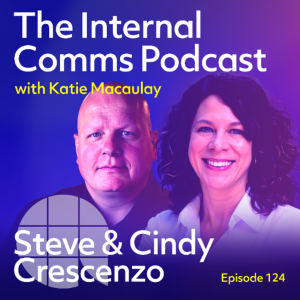
Kicking corporate clichés to the curb with Steve and Cindy Crescenzo (#124)
October 8, 2025
Episode #124 of the Internal Comms Podcast is a joint interview with returning guest Steve Crescenzo and his business partner and wife Cindy. Together, with host Katie Macaulay, th...
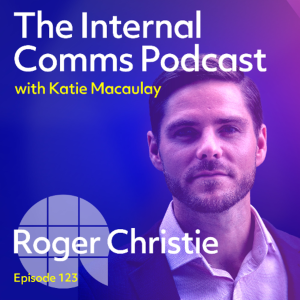
Don’t post, participate – with Roger Christie (#123)
September 24, 2025
In this episode, host Katie Macaulay learns how to get social media right. Tough ask? Not when you’ve got Roger Christie on hand to help. For the past 15 years the founder of ...
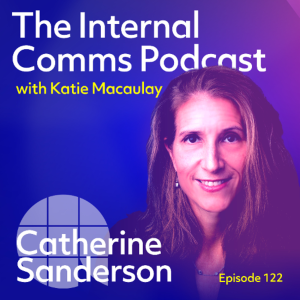
The science of happiness (and why we get it wrong) – with Professor Catherine Sanderson (#122)
September 10, 2025
Season 14 of the Internal Comms Podcast kicks off with a conversation about happiness. Host Katie Macaulay welcomes Professor Catherine Sanderson to discuss what really makes us...
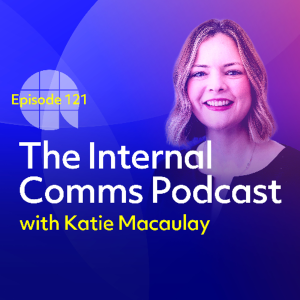
Episode 121 – The story behind Bupa's elephant
June 25, 2025
In this episode of The Internal Comms Podcast, Katie Macaulay is joined by Jo Hudson, Group Director of Internal Communication at Bupa. Jo has spent the past 16 years at Bupa, one...
Episode 120 – Walk the line – how to stay in sync
June 11, 2025
In this episode of The Internal Comms Podcast, host Katie Macaulay sits down with alignment strategist and leadership coach Zora Artis to explore a crucial question: how can intern...
Episode 119 – The suite spot – Microsoft minus the mayhem
May 28, 2025
If the platforms you use at work were built by Microsoft, this episode is essential listening. Katie is joined by Alex Graves, Chief Visionary Officer at Silicon Reef — the peop...
Episode 118 – Satirising the spin – a bullsh*t investigation
May 14, 2025
If you have ever found yourself circling back, touching base, breaking down silos or leveraging strategic synergies — then these guests are speaking your language. Charles Firth...
Episode 117 – From humanising a prime minister to empowering the quietest voices
May 12, 2025
What does it take to make one of the most scrutinised leaders in the world feel relatable? And how do we build internal comms that truly include everyone — especially the quieter...
Episode 116 – How to build a remarkable career without a plan
April 7, 2025
Fred Cook’s career proves success doesn’t require a straight line. Now Chairman Emeritus of global PR agency Golin, Fred has spent 35+ years advising world-famous brands – Am...
Episode 115 – Curiosity, creativity & the imposter myth
March 26, 2025
Inspiration is everywhere when you stay curious. That’s the thread running through this episode of The Internal Comms Podcast, where Katie Macaulay welcomes communication, creati...
Episode 114 – The credibility code: Become the leader your team deserves
March 12, 2025
What does it mean to be a credible leader? And just how important is that credibility to your team? In this episode of The Internal Comms Podcast, host Katie Macaulay welcomes back...
Episode 113 – Soft skill? Think again: The hard truth about storytelling
February 26, 2025
In this episode of The Internal Comms Podcast, host Katie Macaulay welcomes Jeremy Connell-Waite, Global Communications Designer for IBM, an acclaimed speechwriter and storyteller,...
Episode 112 – From intent to impact: take charge of your career
February 20, 2025
We’re back for season 13 of The Internal Comms Podcast and to kick things off, host Katie Macaulay is joined by Eduvie Martin. Eduvie is Group Communications and Engagement Manag...
Season 12 – 2024 Christmas Special: nine gifts from the archive
December 18, 2024
In this episode, we mark a big milestone with a gift-wrapped edition of the Internal Comms Podcast. It’s six years since the show launched and, in this Christmas special, host K...
Episode 111 – A creative leader's blueprint for brilliance
December 4, 2024
This week on The Internal Comms Podcast, host Katie Macaulay is joined by a very special guest – AB's creative director, Joel O’Connor. Joel has been with AB for well over a de...
Episode 110 – Navigating the shifting digital landscape
November 20, 2024
This week on The Internal Comms Podcast, host Katie Macaulay is joined by co-founder of Local Wisdom, tech expert and comms leader Pinaki Kathiari. With his rare passion for both t...
Episode 109 – The business of belonging: A new approach to DEI
November 6, 2024
We all deserve the opportunity to thrive at work. We deserve equal opportunity. We deserve to feel valued and included. That’s what diversity, equity and inclusion (DEI) is all a...
Episode 108 – Seth Godin rewrites the rules of internal communication
October 23, 2024
In this episode, Katie Macaulay is joined by author and influential blogger, Seth Godin. Seth was top of Katie’s guest wish list when The Internal Comms Podcast launched five ye...
Episode 107 – Beyond words: A blueprint for more impactful, immersive IC
October 9, 2024
In this episode of The Internal Comms Podcast, host Katie Macaulay welcomes international internal comms consultant and strategist Monique Zytnik to the hot seat. Monique is the au...
Episode 106 – School of thought: Inside Matt Tidwell’s comms curriculum
September 25, 2024
In this episode of The Internal Comms Podcast, host Katie Macaulay welcomes Matt Tidwell to the hot seat. Matt is a consultant, communicator and educator, and has led comms agencie...
Episode 105 – Reaching the peak of success: IC at Iron Mountain
September 11, 2024
We’re back for Season 12 of The Internal Comms Podcast, and in this first episode, host Katie Macaulay is joined by Senior Director of Corporate Communication at Iron Mountain, N...
Episode 104 – Communications excellence in times of rapid change
July 31, 2024
McKinsey & Company is one of the world’s most renowned strategic management consultancies. With a mission of striving for “change that changes everything”, its global team of...
Episode 103 – Say the thing now: Candid conversations at Reddit
July 10, 2024
On a platform where the candid and the curious are king, how do you make sure what’s inside reflects what’s on the outside? Meet Sean Langston, Jr., Head of Internal Communicat...
Episode 102 – The sound of success: IC at Spotify, Mastercard and beyond
June 26, 2024
Ever been curious about how some of the biggest brands in the world tackle their internal communication challenges? Well look (or listen) no further. Kerri Warner, this week’s gu...
Episode 101 – From complex to clear: Elevate your presentations
June 12, 2024
As internal communicators, empowering leaders to clearly communicate business strategy, important updates and company values is a valued skill. How can we inspire colleagues and le...
Episode 100 – Meet the super-connector behind #CommsJobs
May 29, 2024
After years running an internal communications team, Daniel Mendez emigrated from Chile to the U.S., where he faced a host of barriers to success. A language barrier. A small or no...
Episode 99 – The communicator’s communicator
May 15, 2024
In this episode of The Internal Comms Podcast, host Katie Macaulay is joined by Linda Zebian. The very first Director of Communications at PR management platform Muck Rack, Linda s...
Exclusive reveal: Katie’s IC masterclass
May 1, 2024
Join us for a special episode of The Internal Comms Podcast as host Katie Macaulay announces the imminent launch of her unique on-demand masterclass. With more than three decades ...
Episode 98 – How to build a powerful personal brand
April 17, 2024
This week on The Internal Comms Podcast, host Katie Macaulay is joined by serial entrepreneur, author, keynote speaker and business mentor Chris Ducker. Chris is a renowned expert ...
Episode 97 – Leaving the ladder down: helping IC pros step up
April 3, 2024
In this episode of The Internal Comms Podcast, host Katie Macaulay welcomes back the show’s first-ever guest, Rachel Miller. Rachel is an internationally recognised internal com...
Episode 96 – Inclusion in action: Kindness is the keystone
March 20, 2024
This week on The Internal Comms Podcast, host Katie Macaulay is joined by Global Belonging, Equity and Impact Consultant, and self-styled ‘human-centric technologist’, Bob Wata...
Episode 95 – Mastering your approach to strategic communication
March 6, 2024
This week on The Internal Comms Podcast, host Katie Macaulay is joined by award-winning marketing and communications expert Danielle Bond. Recently retired from corporate life, Da...
Episode 94 – The stories that shape us
February 21, 2024
In this episode of The Internal Comms Podcast, host Katie Macaulay is joined by leadership communications coach and co-founder of Engage Kenya, Agatha Juma. Agatha credits an emba...
Episode 93 – The sound of success: Why it pays to listen to employees
February 7, 2024
We’re back for Season 11 of The Internal Comms Podcast! And kicking us off with a very special episode, this week host Katie Macaulay is joined by not one, not two, but three gue...
Moment 35 – The four Cs of content: How internal communicators can create comms that land
January 31, 2024
Looking for tips on creating internal communications that land – and stick? In this Moment from The Internal Comms Podcast, Steve Crescenzo shares a few things you absolutely mus...
Moment 63 – Are you listening? The power of questions in leadership: Mike Roe
January 24, 2024
“I realised I was probably a pretty crap listener,” Mike Roe tells Katie Macaulay in this Moment from The Internal Comms Podcast. We often go to leaders and start by asking th...
Moment 57 – Language matters: Building two-way engagement at IKEA
January 17, 2024
At IKEA, choosing the right words when communicating with the workforce is everything. Guy Britt, IKEA’s Global Head of Co-worker Comms, tells Katie Macaulay the use of ‘co-wo...
Episode 92 – Revolution coming: How AI is transforming internal comms
December 20, 2023
If you have ever attended one of Shel Holtz’s presentations, you will know that, more often than not, it’s standing room only. Shel has a remarkable ability to anticipate what'...
Moment 61 – Human-centric businesses do better: Victoria Dew
December 6, 2023
Does your approach to internal communication have the human touch? It’s essential to the humans you employ, says Victoria Dew, CEO of Dewpoint Communications and an internal com...
Episode 91 – How to build a one-person IC powerhouse
November 22, 2023
Ever feel like, as an internal communicator, you’re fighting an uphill battle all by yourself? This week’s guest on The Internal Comms Podcast has exactly what you need. Host ...
Episode 90 – A shared vision: ED&I and IC in action
November 8, 2023
This week on The Internal Comms Podcast, host Katie Macaulay is joined by Sim Sian, Head of Equality, Diversity and Inclusion at Mitie, and Yvonne O’Hara, formerly Mitie’s Grou...
Episode 89 – Netflix-style IC: Snackable, on-demand and authentic
October 25, 2023
In this episode of the Internal Comms Podcast, host Katie Macaulay is joined by Access Group’s Global Head of Communications and Engagement, Paul Downey. Paul caught Katie’s ...
Episode 88 – It’s fixable: How to tackle hard problems
October 11, 2023
In this episode of the Internal Comms Podcast, host Katie Macaulay is joined by Anne Morriss. Anne is an entrepreneur, author, public speaker, and the Executive Founder of the Lea...
Episode 87 – Tracing the legacy of internal comms
September 27, 2023
It’s often said we must understand the past to build the future, and that sentiment sits at the very heart of this episode. This week on The Internal Comms Podcast we welcome pr...
Episode 86 – How to crush your next public speaking gig
September 13, 2023
Season 10 of the Internal Comms Podcast kicks off with one of Katie’s most compelling conversations yet. Shil Shanghavi is a public speaking specialist, storyteller and head of...
Coming soon: Season 10 of The Internal Comms Podcast
September 6, 2023
Our summer break is drawing to a close, Katie has dusted off her mic and we’re ready to launch Season 10 of The Internal Comms Podcast! This season, we’ll be welcoming more o...
Moment 18 – 3% of employees are driving 90% of conversations: Mike Klein
August 30, 2023
In this moment, we catch up with Mike Klein, former political consultant, modern-day communications stalwart, and two-time guest on the Internal Comms Podcast. Mike breaks down h...
Moment 17 – How we create meaning: Sue Dewhurst & Liam FitzPatrick
August 23, 2023
What’s our one true purpose as internal communicators? It’s the question we’re all seeking the answer to. This moment takes us back to when Katie first welcomed Sue Dewhurs...
Moment 13 – The message must change at each leadership level: Dr Kevin Ruck
August 16, 2023
If there’s one thing we’re clear about at AB, it’s that communication should not be a one-way street. And that’s what this moment is about. We head back to Episode 13, w...
Moment 06 – On tolerance, kindness and being enough: Henry Normal
August 9, 2023
As communicators, we could often do with slowing things down a little. In this moment, Henry Normal – author and co-founder of production company Baby Cow, which he founded with ...
Moment 01 – What happens inside is reflected outside: Rachel Miller
August 2, 2023
Have you heard of an inside-out approach to communication? It’s no secret that today’s internal comms messages seep into the world outside the office walls. After all, anythi...
Episode 85 – Lessons from a trailblazer
July 26, 2023
We’re ending Season 9 of the Internal Comms Podcast with a bang this week, as Sally Susman takes to the hot seat for her second appearance. Sally is Executive Vice President an...
Episode 84 – Ethics in action: Insights from a global compliance leader
July 12, 2023
In modern business, integrity is non-negotiable. As legislation ramps up in lockstep with colleague and customer demands, operating an ethical business in line with global regula...
Episode 83 – ESG: How IC can drive the agenda
June 28, 2023
Define ESG… Well, it stands for environment, social and governance. But can you really define what ESG actually is? Put very simply, ESG is a set of criteria used to evaluate a ...
Episode 82 – The truth about resilience
May 31, 2023
It seems everyone’s talking about resilience, the ability to bounce back from misfortune or adversity. But as Bruce Daisley explains to host Katie Macaulay, there’s something w...
Episode 81 – Unilever: Inside a global success story
May 17, 2023
With over 130,000 colleagues, and a 100-year history, Unilever is one of the world’s largest consumer goods companies. And this week on the Internal Comms Podcast, we get a peek ...
Episode 80 – The inside track on comms at Mercedes F1
May 3, 2023
“The days we fail are the days our competitors live to regret,” said the late, great Niki Lauda. And that’s what this episode of the Internal Comms Podcast is all about. Thi...
Episode 79 – Lifting the lid on comms consultancy
April 19, 2023
Ever considered what it takes to become an effective communications consultant? Then this week’s episode of The Internal Comms Podcast is for you. Host Katie Macaulay welcomes Si...
Episode 78 – Comms with courage
April 5, 2023
This week on The Internal Comms Podcast, host Katie Macaulay welcomes Audacity’s Jason Anthoine. Jason has spent three decades working in internal communication, employee experie...
Episode 77 – Here for the culture
March 22, 2023
This week on The Internal Comms Podcast, host Katie Macaulay welcomes culture-chameleon Shane Hatton. Shane is many things – author, international speaker, trainer, leadership co...
Episode 76 – Employee experience: For the people by the people
March 8, 2023
This week on The Internal Comms Podcast, host Katie Macaulay welcomes Nicholas Wardle. Nicholas is Head of Employee Experience at Brand Experiences, and co-author of ‘Monetising ...
Episode 75 – Inside the world’s most famous corner shop
February 22, 2023
This week on The Internal Comms Podcast, host Katie Macaulay welcomes Sam Bleazard. Sam’s role as Employer Brand Content Producer takes him behind the scenes of ‘the world’s ...
Episode 74 – Culture with sticking power
February 8, 2023
The Internal Comms Podcast is back for Season 9! To kick off this season, we welcomed BizJuicer’s Andy Goram to the hot seat. Andy’s passion for building businesses ‘from t...
Season 8: In the rear view mirror
February 1, 2023
With Season 9 of The Internal Comms Podcast right around the corner, host Katie Macaulay has taken the opportunity to reflect on the wisdom and insight shared over our latest seaso...
Episode 73 – Forging your own path
December 21, 2022
The season 8 finale features Jennifer Thomas, Head of Communications for the Data & Analytics branch of the London Stock Exchange Group. Born in London to Guyanese parents, Jennif...
Episode 72 – Making your way to the top
December 7, 2022
Episode 72 of The Internal Comms Podcast sees host Katie Macaulay joined by Adrian Cropley, CEO and founder of Cropley Communication and the Centre for Strategic Communication Exce...
Episode 71 – Effective comms starts with knowing yourself
November 23, 2022
This week’s guest on The Internal Comms Podcast is Joanna Parsons, Head of Internal Communications & Culture at Teamwork. Joanna made Irish history as the first ever Head of Inte...

Episode 70 – Reaching across the aisle
November 9, 2022
Shelby Scarbrough, author of 'Civility Rules! Creating a Purposeful Practice of Civility', shares her deep insight and experience ‘reaching across the aisle’ on episode 70 of T...
Episode 69 – Measuring what matters – actions not feelings
October 26, 2022
Episode 69 of The Internal Comms Podcast sees IC heavyweight Mike Klein return to the hot seat. An internal and social communication consultant based out of Reykjavik, Mike is help...
Episode 68 – Host in the hot seat: Reflections on 250,000 plays
October 12, 2022
In this very special episode of The Internal Comms Podcast, the tables have turned. Katie Macaulay is in the hot seat, and AB’s Senior Content Editor Freddie Reynolds takes over ...
Episode 67 – The ABC of research: Ask, believe, change
September 28, 2022
In this episode of The Internal Comms Podcast, host Katie Macaulay invites qualitative research expert Mari Lee to sit in the hot seat. Mari’s specialism is in ‘development com...
Episode 66 – Combatting IC isolation
September 14, 2022
The Internal Comms Podcast is back for what promises to be an incredible Season 8! In this kick-off episode, host Katie Macaulay welcomes ICology’s Vice President of Community an...
Season 7: The rewind episode
September 7, 2022
The countdown is on, and The Internal Comms Podcast will be returning from its summer break with Season 8 imminently. And while its eighth instalment promises wisdom unbound from a...
Episode 65 – Remote but not unreachable
June 22, 2022
In the final episode of season 7 of The Internal Comms Podcast, host Katie Macaulay speaks with Lily Goodman D’Amato, Delivery Trainer at US-based digital pharmacy Medly. Lily b...
Episode 64 – Releasing your inner sceptic
June 8, 2022
In the latest episode of The Internal Comms Podcast, host Katie Macaulay speaks with Martin Flegg, founder and co-owner of The IC Citizen internal communications consultancy. With...
Episode 63 – Lessons in leadership
May 25, 2022
In episode 63 of The Internal Comms Podcast, host Katie Macaulay meets Mike Roe, who had a 28-year career in the police force and is now CEO of Tensense, a data insights company. ...
Episode 62 – Textbook IC: rewriting comms for a new era
May 11, 2022
In the latest episode of The Internal Comms Podcast, host Katie Macaulay speaks with the duo who wrote the book on internal communications – literally. Sue Dewhurst has worked i...
Episode 61 – Embracing the messiness of being human
April 27, 2022
In this week’s episode of The Internal Comms Podcast, host Katie Macaulay sits down with Victoria Dew, founder and CEO of Dewpoint Communications. Her firm is focused on helping ...
Episode 60 – How to have better conversations
April 13, 2022
In this week’s episode of The Internal Comms Podcast, host Katie Macaulay sits down with Jackie Stavros and Cheri Torres, co-authors of Conversations Worth Having, Using Apprecia...
Episode 59 – Strategy & IC: A masterclass in collaboration
March 30, 2022
In this episode of The Internal Comms Podcast, host Katie Macaluay looks into the dynamic between internal comms and strategy – at its best a symbiotic relationship that drives t...
Episode 58 – The state of IC: what’s behind the numbers?
March 16, 2022
In episode 58 of The Internal Comms Podcast, we dissect the results of the latest State of the Sector report, the definitive global survey of the internal communication landscape, ...
Episode 57 – Unboxing internal comms at IKEA
March 2, 2022
In episode 57 of The Internal Comms Podcast, listeners can take a peek inside the world of IC at IKEA, as host Katie Macaulay chats with a dynamic duo from the multinational furnit...
Episode 56 – IC at the sharp end
February 16, 2022
In this first episode of season 7 of The Internal Comms Podcast, host Katie Macaulay talks to Jim Shaffer, an internationally recognised business adviser, leadership coach, author ...
Leading Lights – Highlights From Season 6
February 9, 2022
Get ready to tune in to our next season of The Internal Comms Podcast. While Season 7 promises an amazing array of guests, this special episode highlights some of the best moments ...

Episode 55 – Mission Possible
December 1, 2021
In the final episode of season 6 of The Internal Comms Podcast, host Katie Macaulay speaks to Sally Susman, Executive Vice President and Chief Corporate Affairs Officer at Pfizer. ...
Episode 54 – Brain care: Mastering your mind
November 17, 2021
In the sixth episode of season 6 of The Internal Comms Podcast, host Katie Macaulay talks to Phil Dobson, founder of BrainWorkshops and author of The Brain Book: How to Think and W...
Episode 53 – Suicide Prevention: Reflecting on an award-winning campaign
November 3, 2021
***The content in this episode of The Internal Comms Podcast may be triggering for those who have experience of suicide.*** In the fourth episode of season 6 of The Internal Comms...
Episode 52 – How do you create comms with purpose?
October 20, 2021
In the fourth episode of season 6 of The Internal Comms Podcast, host Katie Macaulay catches up with Maliha Aqeel, Director of Global Communications and Digital Channels at Fix Net...
Episode 51 – Why are we here? How purpose and values drive healthy cultures
October 6, 2021
In the third episode of season 6 of The Internal Comms Podcast, host Katie Macaulay catches up with communications expert and IABC Fellow Jane Mitchell. Jane began her career with...
Episode 50 – A guru’s guide to internal podcasts
September 22, 2021
In the second episode of season 6 of The Internal Comms Podcast, host Katie Macaulay talks to Brian Landau, an authority in podcasting and expert on all things audio content creati...
Episode 49 – Engagement: how it started, how it's going
September 8, 2021
In this first episode of season 6 of The Internal Comms Podcast, host Katie Macaulay talks to the father of employee engagement, organisational psychologist Professor William Kahn....
Industry experts – highlights from Season 5
September 1, 2021
The curtain is about to go up on the new season of The Internal Comms Podcast, with some fantastic guests joining host Katie Macaulay to talk about all things communication. For t...
Episode 48 – Changing minds: using behavioural science in IC
May 12, 2021
It has always been Katie Macaulay’s goal for The Internal Comms Podcast to help improve the way organisations communicate with their people, and this week she does so by explorin...
Episode 47 – Conversation with a comms rebel
April 28, 2021
Katie Macaulay’s guest this week is a leading light in efforts to advance the careers of under-represented groups in IC. Advita Patel is a qualified coach, mentor, public speake...
Episode 46 – Influential Internal Communication
April 14, 2021
This episode sees the return of the brilliant business communications strategist, international public speaker and podcast host Jenni Field. The immediate past chair of the Charte...
Episode 45 – Sharing the magic
March 31, 2021
The life and career of this week’s guest has been a literal roller coaster. Mark Webb fell into PR and media relations by chance, after spotting a job ad for the new Eurodisney ...
Episode 44 – How to prove your presence
March 17, 2021
Katie Macaulay’s guest for episode 44 of The IC Podcast is Canadian comms expert Prarthna Thakore. After beginning her career in Calgary and then moving to London, Prarthna has ...
Episode 43 – Kate Jones on the state of our sector
March 3, 2021
Every year since 2008, internal comms pros have responded to the Gallagher State of the Sector report. Because it’s been running for 13 years, and because similar questions are a...
Episode 42 – Once Upon A Time In IC
February 17, 2021
Katie Macaulay kicks off Season 5 of The IC Podcast with a riveting conversation with business storytelling specialist Gabrielle Dolan. Gabrielle is a highly sought-after internat...
Looking back, looking forward: highlights from Season 4
February 10, 2021
With the new season of The Internal Comms Podcast just around the corner, we wanted to whet your appetite with a selection of the best bits from Season 4. For this special best-of...
Episode 41 – At the heart of the crisis: NHS comms during Covid-19
December 23, 2020
The NHS has never been far from our hearts and minds over the last few months. As the national jewel in the UK’s crown, the National Health Service has battled many difficulties ...
Episode 40 – Founding fathers – building the first IC agency
December 17, 2020
What prompted the creation of the first IC agency back in 1964 and what convinced those first chief executives that they needed external help communicating with their employees? W...
Coming soon in season 4
December 9, 2020
Coming soon in season 4 of The Internal Comms Podcast

Episode 39 – Evidence-based IC
November 25, 2020
Recent research shows measurement is particularly challenging for many internal comms professionals. Katie’s guest on this episode of The Internal Comms Podcast is Benjamin Ellis...

Episode 38 – The secret thoughts of successful people
November 11, 2020
Amid the turmoil of 2020, with IC pros thrown into the spotlight as we strive to keep colleagues informed and connected, it’s not surprising that many of us are feeling a degree ...
Episode 37 – The art of negotiation
October 28, 2020
If you want to take your communication skills to the next level, then this episode of The Internal Comms Podcast is for you. Katie’s guest is a formidable negotiator and expert ...

Episode 36 – Navigating the digital landscape
October 14, 2020
In this episode of The Internal Comms Podcast we meet digital expert Frank Wolf. Frank spent seven years as a business consultant at Accenture. Then at T Mobile, he was responsible...
Episode 35 – How to do less, but do it better
September 30, 2020
In this episode of The Internal Comms Podcast we meet Steve Crescenzo, a witty, straight-talking and charismatic speaker, workshop leader and coach from Chicago, USA, who has spent...
Episode 34 – Cross-cultural comms
September 16, 2020
The Internal Comms Podcast is now in its fourth season – and to kick it off Katie sat down with Tasneem Chopra for some honest and open conversation. The self-styled “professi...
Choice cuts: highlights from Season 3 of The IC Podcast
September 2, 2020
Before the curtain lifts on Season 4 of The IC Podcast, we wanted to leave you with some food for thought from Season 3. And what a season it was; we had a whole host of remarkabl...
Episode 33 – IC’s founding father
July 8, 2020
The goal of this podcast is to bring you meaningful, in-depth conversations with people who are helping to shape the world of internal communication: practitioners, leaders, author...

Episode 32 – Leadership in unprecedented times
June 24, 2020
President of the Chartered Institute of Public Relations (CIPR), Jenni Field has more than 16 years’ experience in communications. She is the founder and director of Redefining C...
Episode 31 – What's next? IABC roundtable on the impact of Coronavirus
June 10, 2020
The Internal Comms Podcast has gone truly global with our latest episode featuring three speakers from three countries. In episode 31 Katie tables a roundtable discussion with Jen...

Episode 30 – Your biggest, best, boldest self
May 27, 2020
Chief Executive of the Office for Nuclear Regulation (ONR), Adriènne Kelbie has an exceptional understanding of the true power of communication and engagement. The first woman to ...
Episode 29 – Crisis communication at the coalface
May 13, 2020
Katie’s guest this week is someone who is no stranger to crisis communication. Amanda Coleman was the Director of Corporate Communication at Greater Manchester Police when, on M...
Episode 28 – The Godfather of IC
April 29, 2020
Katie’s guest this week is one of the world’s leading authorities on internal comms and the management of change: Bill Quirke. As managing director of IC consultancy Synopsis,...
Episode 27 – Stepping up in a Crisis
April 14, 2020
This week Katie speaks to renowned communicator Shel Holtz. As listeners continue to grapple with keeping workforces informed, galvanised and feeling connected during the corona cr...
Episode 26 – How to thrive in IC (Part II)
April 1, 2020
This episode is recorded as the majority of the UK is in lockdown while the country attempts to flatten the curve of the COVID-19 pandemic. Katie Macaulay’s guest, Rachel Miller...
Episode 25 – Crisis Communications: Covid-19 Special
March 25, 2020
Katie Macaulay recorded this special episode on Friday 20 March 2020 in response to the rapidly developing situation surrounding the Covid-19 pandemic. Her guests to talk all thin...
Episode 24 – A view from the top
March 18, 2020
In this episode of The Internal Comms Podcast, Katie puts her first CEO in the hotseat: Marc Barone. Marc is chief executive for continental Europe at AECOM. This Fortune 500 comp...
Episode 23 – Courage, confidence and communication
March 4, 2020
In this episode of The Internal Comms Podcast Katie talks to one of world’s most qualified communicators, Priya Bates, from Canada. Priya has an Accredited Business Communicator...
Episode 22 – State of the Sector
February 19, 2020
State of the Sector is the longest-established and most in-depth survey of the internal communication profession, based on responses from more than 1,000 professionals around the w...
Episode 21 – The cheerleader for IC
February 5, 2020
During Seasons One and Two we covered a lot of ground in IC and beyond. As we begin Season Three, brace yourself for more fascinating insights as we delve into the very heart of co...
The highlight reel – nuggets of wisdom from Season 1 and 2 of The IC Podcast
January 29, 2020
Since the launch of The Internal Comms Podcast, host Katie Macaulay has interviewed more than 20 fascinating guests from the world of IC and beyond. Now, as we gear up for Season ...
Episode 20 – Advocacy in action
December 18, 2019
Katie’s guest this week is Keith Lewis, UK Social Media and Social Business Manager for Zurich Insurance – one of the world’s largest insurance groups with 55,000 employees i...
Episode 19 – The appliance of neuroscience
December 4, 2019
Katie Macaulay’s guest this week is a neuroscientist with extensive experience in the field of organisational change. Hilary Scarlett began studying the brain in 2009 after read...
Episode 18 – Editing organisations
November 20, 2019
In this episode we get up close and personal with someone who helps improve the way we communicate at work. Mike Klein worked as a political consultant in the US, but for the past...
Episode 17 – Black Belt Thinking
November 6, 2019
As individuals, this week’s guests have impressive CVs. Sue Dewhurst is an experienced internal communicator who, for many years, has been training and coaching thousands of lea...
Episode 16 – A Passage to India
October 23, 2019
With this podcast now reaching listeners in 50 countries worldwide, host Katie Macaulay has chosen to go international for this episode. Her guest is creative services entrepreneu...
Episode 15 – The Power of Two
October 8, 2019
This week, Katie meets Claire Hyde and Louise Wadman, joint heads of IC at KPMG UK. Possibly the most senior IC job share in the country, Claire and Louise have more than 45 years...
Episode 14 – How to start a movement
September 24, 2019
Katie’s guest this episode is Nita Clarke – whose services to employee engagement have earned her an OBE from the Queen. Nita has a long and fascinating career. She co-authore...
Episode 13 – A check-up with the IC doctor
September 11, 2019
The Internal Comms Podcast is back with a new series of fortnightly conversations with leading lights from the world of internal communications, engagement and leadership. AB Mana...
Season 02 Trailer
September 6, 2019
Season two of The Internal Comms Podcast is almost here!
Episode 12 – Listen and learn: insights from 30 years in IC
July 24, 2019
In this extra special bonus episode of The Internal Comms Podcast, the tables are turned on Katie as she takes the spotlight as an interviewee. Posing the searching questions is J...
Episode 11 – Putting the soul back into Patisserie Valerie
June 25, 2019
For this special bonus episode of The IC Podcast, Katie interviewed Paolo Peretti, Managing Retail Director of Patisserie Valerie, in front of a live audience at AB Thinks Live, ou...
Episode 10 – Internal comms at the sharp end - recorded at IoIC live
May 21, 2019
For the final episode of season one, Katie Macaulay travels to Bath for IoIC Live and interviews two of the conference’s speakers, Martin Fitzpatrick and Matt Batten. Both Marti...

Episode 09 – How to win colleagues and influence people
May 7, 2019
Social influencer marketing is a new and rapidly growing means of getting your message out to your audience. It’s changed the face of advertising and has everyone from up-to-the-...
Episode 08 – The Joy of Work
April 23, 2019
Katie’s guest this week is an extremely versatile communicator. In his day job as European Vice President of Twitter, Bruce Daisley has overseen the development of one of the wor...
Episode 07 – What social purpose (really) means
April 9, 2019
Running the UK’s largest retail and financial services network with more branches than all of the UK’s banks and building societies put together, the Post Office is at the hear...
Episode 06 – The craft of communication
March 27, 2019
In episode six, Katie travels beyond the boundaries of internal comms to find out how to write more engagingly, tell better stories and use humour to deliver your message. And who ...
Episode 05 – Learning comms lessons from PR
March 13, 2019
In episode five, Katie aims to find out what internal communications can learn from external communications. So she sits down with ‘mister public relations’, Stephen Waddington...
Episode 04 – What it means to be the voice of IC
February 27, 2019
The Institute of Internal Communication (IoIC) is the voice of the IC profession – dedicated to strengthening confidence, credibility and community. And on 12 March, the IoIC cel...
Episode 03 – What the State of the Sector report means for IC
February 13, 2019
Episode three lands as Gatehouse’s latest State of the Sector report is published. Katie invites Jenni Field, a tireless, high-profile personality of the IC landscape, to discus...
Episode 02 – What it takes to be an IC leader
January 30, 2019
Even if you’re only vaguely familiar with internal communications, Katie’s guest in episode two will no doubt be a name you recognise. In a career spanning 30 years, Russell G...
Episode 01 – How to thrive in IC
January 16, 2019
In the first episode of The Internal Comms Podcast, Katie meets Rachel Miller – a prolific blogger, educator, keynote speaker and one of the most respected voices in internal com...